Genuine question: (you're on a throwaway, what's the harm in answering me, right?)
What is there to buy into about pronouns? If my first name is Stan, named after my dad also named Stan, and my middle name is Jason, and my dad abandoned my family when I was young so I prefer people to call me Jason, you'd have no problem calling me Jason and be understanding that calling me Stan is a sore point, right?
What if I don't want to explain my personal issues with my father and childhood family situation to coworkers? If I just say that I really strongly prefer Jason and that it genuinely upsets me if you call me Stan, would you demand an explanation?
So if I claim, without explaining, that I strongly dislike being addressed as "she" and strongly prefer "he", isn't that the same amount of work? What is there to buy into, an explanation about personal struggles with gender dysphoria? That seems like a pretty personal thing to expect from a coworker, does it not?
I think the “buy into” aspect is possibly buying into the importance of it all.
In the current climate, it’s a charged issue, because for one side it’s a matter of respect, dignity, and honoring a persons agency, and for the other it’s about coercive speech and toeing closer to coercive thought.
And then there’s the the third side that can perhaps see that both sides have valid points, except that none of it matters in the long run.
If words are so empty that they can be bent to call a woman a man, a man a woman, blue as red, 50 as 1,000, depending on a person’s internal emotional state, then whatever we choose to say is as valid as anything else.
And if one person refuses to comply with social niceties, it doesn’t necessarily indicate anything other than, at worst, said person is a dick.
So I think right now, it’s a social crusade for both parties, and not everyone wants to get sucked into feeling passionate about everyone else's fights. And that doesn’t mean you’re choosing sides.
But somehow, less than 100% virtue signaling in either direction means you’re implicitly supporting “them”.
But, my approach is, when dealing with people, I’m not going to be a dick, and I’ll happily call them a preferred pronoun, within reason, even though it’s really not that important to me. But I’m also not going to go out of my way to try to fix everyone who is a dick either, even when it is something important to me.
>If words are so empty that they can be bent to call a woman a man, a man a woman
Based on this statement, I don't quite think you understand what being transgender actually is. It's not people asking to be called the opposite gender, it's people asking to be called the gender that they actually are, and have been their entire lives, but who had the vast misfortune of being born into the wrong body. There is not a 1:1 correlation between the body's sex and the mind's sex; usually they match up, but sometimes they don't. Gender dysphoria has severely negative outcomes for mental health and well-being, and no one chooses it willingly.
Oh, I’m also not claiming anyone is choosing gender dysphoria, but they are choosing their responses to it. I’m sure there are ways to superficially suppress the mental side just as we can superficially suppress the physical side. One is, in this day and age seen as preferable, and the other is a seen as caving into social norms, and denying your true self. But why is perception, one that is not shared or independently validated to be true or measurable in any way the one to follow?
I’m not saying these are easy questions or that I even understand the experience. But simply that there are many people who view themselves or others in a way that contradicts quantitative facts, but there isn’t a large social movement to have the world at large support that perception.
But as I said originally, inasmuch as it doesn’t require anyone to do anything and doesn’t have a cost to anyone else, what do I care?
Is mental gender something that can be as quantitatively determined as physical gender?
And what is a male or female brain apart from the accompanying biology?
What makes it uniquely male vs female?
Names says nothing about a person while he/she describes an aspect of you. A person who wants to use the wrong pronoun is like a fat person wanting people to call them thin. Of course calling fat people fat is not very nice, the same can be said about missgendering people, but it is very hard to call fat people thin so you try to avoid the subject.
So if you look like and behave like a man then people will call you a man, if you look like and behave like a woman then people will call you a woman. Of course there are cases where the person looks like and behaves like the other gender but some assholes still calls them by their old pronoun, but in most cases I see someone who is obviously male wanting to be called female or vice versa. In those cases it hurts a bit because it goes against the meaning of the words, and given how our language is structured it is very hard to avoid the subject like most people do with other attributes.
What is the issue, that you are claiming grave consequences exist for making an innocent mistake, and that's happened to you enough times to generalize?
...or are you saying you are unwilling to behave in an expected manner once you understand the expectations?
...in the latter case, do you find yourself frequently disagreeing with other people about who looks and behaves like a man/woman? Or are you just disagreeing about whether to honor their preferences?
Edit/addition:
There was a time when people claimed a man with long hair or a woman with short hair was indistinguishable from the opposite sex.[1] Which pronoun do you use in that situation?
I don't know a lot of trans people in real life and I have never miss-gendered someone. But there are a lot of prominent trans people in for example the gaming community and I am basing that anecdote on the discussions from there.
Edit: Note that I am not the person above the parent, I don't think there are any grave consequences for missgendering people, at least not if you don't do it consistently. I guess it could happen if you did it on for example twitter and some activist picked it up, but not in a casual conversation at work.
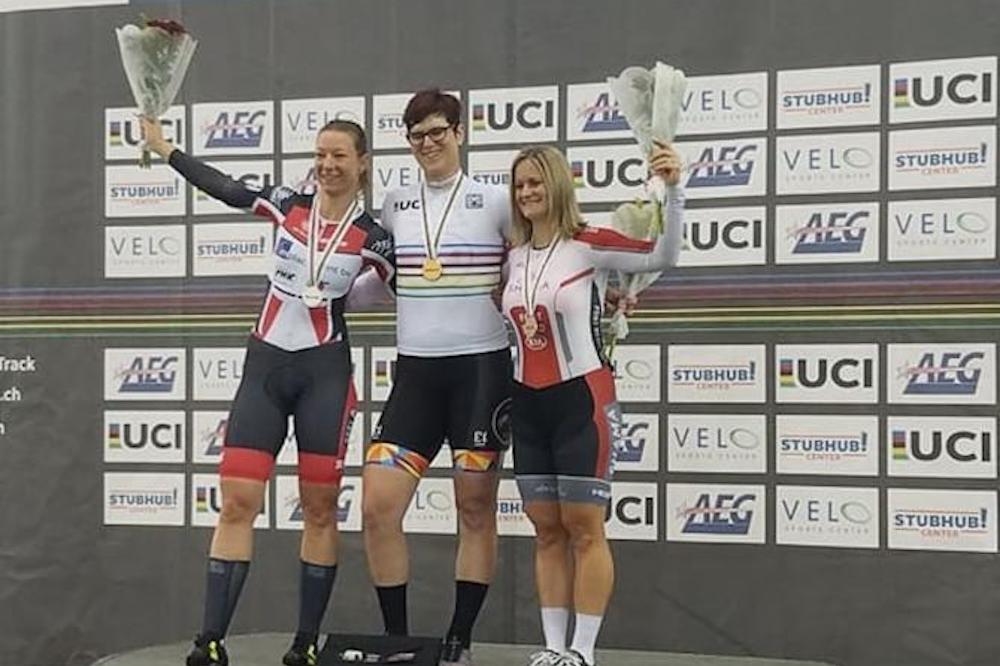
If I saw it without context I'd assume it was a guy being surrounded by two women based on their body and face structures, it is very hard to see the middle one as a woman. But surprisingly they are all three women.
Sounds like a genuine question, so I'll give a genuine answer:
I'm a very busy person at work. The amount of daily cognitive load I dedicate to pronouns there is essentially zero because it never comes up. The only time it becomes nonzero is when someone else who thinks it's vitally important brings it up, which is pretty much always memegen or some other internal forum where political advocacy creeps in. If someone were to ever ask me, "Hey, can you call me 'she' instead" I'd have no problem doing so. It's just common courtesy and most of my job at Google involves building and maintaining relationships. But I don't go out of my way to list people's pronouns next to their userids in design docs, or have a section in every presentation on pronouns in order to signal that I'm woke. Just like if someone pointed out that he goes by a middle name, I'd call them that because that's what they prefer, but I'm not going to ask everyone I meet if they go by a middle name or some other name.
As engineers we consider rare edge cases in our designs but typically do not build our solutions around them.
The difference between pronouns and first-names is that nobody is out there searching for instances where I inadvertently called someone by their first name so that they can go into outrage mode, call me out and shame me for it.
When I say some people don't "buy into the whole pronouns thing", I mean they are indifferent to it--they don't think about it every day, they don't consider it some vitally important cause that the company must urgently dedicate resources and collective cognitive load to.
That makes sense, I also dislike people seeking out innocent mistakes and interpreting them in the worst way. "Woke" people definitely don't have a monopoly on that, but it's natural that the hotter a topic is at any given moment, the more common it'll be for that topic.
I don't know how fair it is to suggest that people who have a section in their presentations on pronouns are just trying to "signal that they're woke". It makes sense to me that someone who is personally sensitive about them or has a close personal connection with someone who is personally sensitive about them would do so out of conscientiousness, not disingenuousness.
Thanks for your perspective, I totally agree that it doesn't deserve much cognitive load. Adding pronouns to a slide that had people's names on it would take up less space than most surnames, and while shaming someone if it doesn't occur to them to do so is undeserved, it baffles me when people vehemently resist and spend incredible cognitive resources arguing that it's an enormous burden they can't possibly bear.
Because changing a name allows the same English grammar to be used the same as it usually would and creating a new pronoun does not. Also, I feel like no one would really care that much if people called Stan by the name that’s registered to him (but prefers not to be called), whereas it becomes a political issue if someone didn’t call him by his preferred pronoun.
I'm sure some people might only slightly prefer not to be called Stan. However, I specifically gave an example of why someone might instead have strong emotional reasons to prefer not to be called Stan.
I'm not sure why becoming a political issue is relevant—if Alice is generally kind to people but refuses to be kind to Bob not because of something Bob did wrong, but because the particular instance of kindness is a political issue, I don't think Alice is a kind person.
The point about grammar doesn't make much sense to me. Someone says "actually I'm not John, I'm Mary", you think it would be more grammatical to start referring to them as Mary, but continue to use he/him?


What is there to buy into about pronouns? If my first name is Stan, named after my dad also named Stan, and my middle name is Jason, and my dad abandoned my family when I was young so I prefer people to call me Jason, you'd have no problem calling me Jason and be understanding that calling me Stan is a sore point, right?
What if I don't want to explain my personal issues with my father and childhood family situation to coworkers? If I just say that I really strongly prefer Jason and that it genuinely upsets me if you call me Stan, would you demand an explanation?
So if I claim, without explaining, that I strongly dislike being addressed as "she" and strongly prefer "he", isn't that the same amount of work? What is there to buy into, an explanation about personal struggles with gender dysphoria? That seems like a pretty personal thing to expect from a coworker, does it not?
What am I missing?